PWN Global is a global network of people accelerating gender balanced leadership in business and society, through professional development and international, cross-industry, online and in-person networking.
Learn, connect, share, advance globally

Benefits of membership
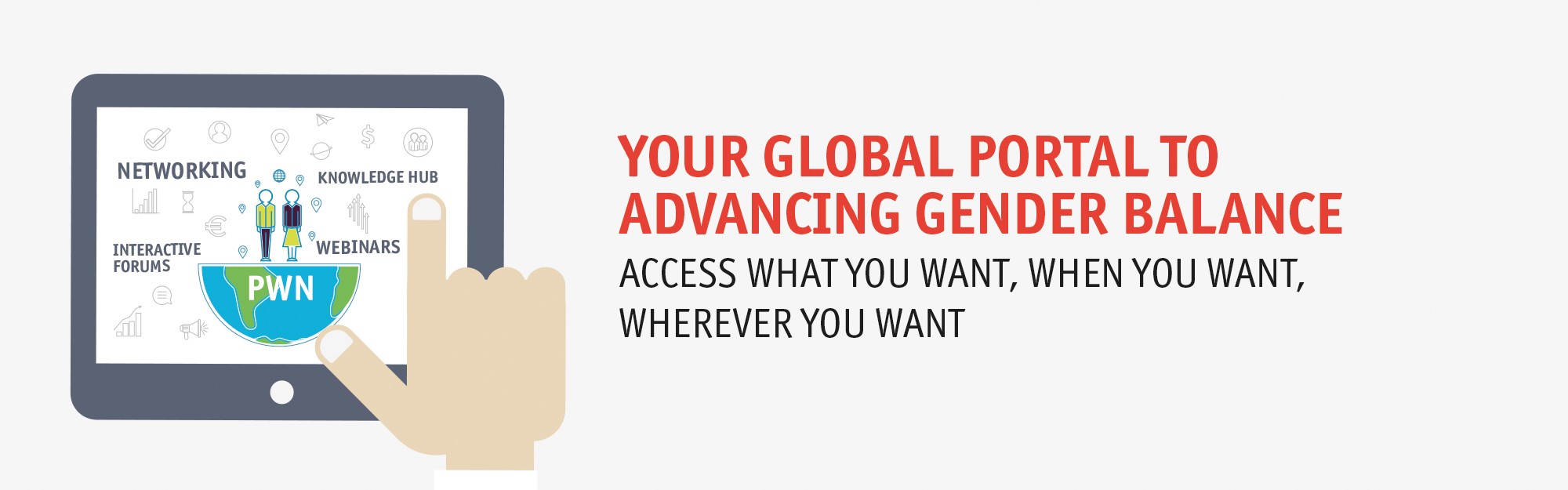 PWN offers you a one-stop platform to connect with like-minded professionals from across the world; to develop your skills and competencies, and to share your experience and knowledge. Become a member of the PWN Global community and you can:
- Access a ready built global professional network that will help you to achieve your career aspirations
- Learn from diverse sources (local events, mentoring, forums, webinars and dynamic content) how you can advance your career and make a difference to gender balance globally
Become a Corporate Partner and make a difference. We will support you with our corporate services, raise your visibility as a Gender Balanced Organisation and meet your geographical needs with a comprehensive programme. Together we will place gender balance at the very core of your operations.
Connect, share, learn, advance – yourself and the world!
3464 events globally
View calendar-
Networking Drinks Abril | El Duelo del Despido para Mujeres Líderes
Selfie Restaurante 24 April 2024Únete a nosotr@s en este Networking Drinks donde exploraremos cómo transformar el despido en...
-
Hormones Workshop: EmpowerHer: Navigating Hormonal Changes in the Workplace with Confidence and Success
Lidera Barcelona Activa Barcelona 25 April 2024Join us at our next workshop: EmpowerHer: Navigating Hormonal Changes in the Workplace with...
-
Stavanger Social Mix and Mingle with a Twist!
Salon Du Nord, Victoria Hotel 26 April 2024Due to it's previous success, we are bringing back our informal networking night at the Salon Du...
-
PWN Copenhagen: Entrepreneurs Circle - Aligned Entrepreneurship
Antler - Blox Hub 2 May 2024Professional Women’s Network (PWN) Copenhagen in collaboration with Antler is excited to...
What's Hot #01
Survey reveals progress towards gender equality
Women have more independence, and a greater portion of men are involved in the housework in 2019 than in 2015, according to a recently revealed survey conducted by USAID’s Nobo Jatra project and led by World Vision Bangladesh.
LEARN MOREWhat's Hot #02
What Is the ‘Broken Rung,’ and How Can Companies Fix It?
It’s just one promotion. What’s the big deal? Historically, women getting passed over for promotions early in their careers can translate into a very big deal. When fewer women get promoted to management positions earlier in their careers, it follows that there are fewer women to promote to...
LEARN MOREWhat we offer
-
 Women on Boards
Women on Boards
Women on BoardsAt PWN Global we are committed to create significant, positive impact on gender-balanced l...
Read more -
 International Mentoring Programme 2024
International Mentoring Programme 2024
International Mentoring Programme 2024UPDATE: Registration Open 1st - 29th February 2024Programme start date: Mid-March 2024 C...
Read more -
 Entrepreneurship
Entrepreneurship
EntrepreneurshipFind out more about the Virtual Entrepreneurship Program The PWN Virtual Entrepreneur...
Read more -
 Networking / Events
Networking / Events
Networking / EventsNetworking is one of the single most powerful ways to boost your career and contributes to...
Read more -
 Knowledge
Knowledge
KnowledgeToo much information, not enough time? Let us help you cut though the noise!! We present y...
Read more
PWN Global Q1 Newsletter
Check out our Q1 Newsletter - featuring the introduction of our International Mentoring Programme 2024 and Women on Boards. Read more by clicking here.
SEE MORE